Pages

Showing posts with label free tutorial. Show all posts

Thursday, April 02, 2015

TUTORIAL: How to Dye Eggs with Silk

It's that time of year, Easter in the Christian world. Happy Easter to those that celebrate from my egg laden table to yours! At my house, like most creative activities, dying Easter eggs is an art, we try new techniques each year.

This year, this video tutorial on how to dye eggs with silk scarves was shared by a few of my facebook friends. I thought, heck, that looks easy and lovely, I will give it a try. I found the instructions a little sparse, so I turned to Martha to fill in the blanks.


Materials:
-eggs (as few or many as you want, my scarf was enough for 9 and and I didn't want to do a 2nd batch)
-silk scarf, neckties, boxers, shirts, fabric, etc. (must be 100% silk) mine was $2.99 at Goodwill. (Tip: look for small scale prints, you will enjoy the tiny details on your egss, or mix and match, I wouldn't go much larger than the print I have featured or you will get mostly solid eggs).
-scissors-white fabric (anything, old sheet, cotton muslin, old tablecloth etc.)
-twist ties (plastic coated if you have them otherwise paper coated works, I just found they dissolved in the water and were harder to remove).
-3 tablespoons white vinegar-water
-non-reactive pot (I used metal successfully, though Martha suggests glass or enamel and the video uses enamel)
-stove
-vegetable oil (optional - to give shine to finished eggs)

Step 1:
Thrift, raid your closet or purchase new, something made of silk. You will be cutting it into pieces and the dye will bleed in the hot water so make sure it is something you are willing to part with. Make sure whatever you use is 100% silk as they dye process used in dying natural fibers such as silk is what allows the dye to transfer to your eggs...you know you your fancy clothes need to be washed in cold water? This is why, they are not color fast in hot water.

Step 2:
Cut your silk into 7" x 7" squares. Note: many silks have rich enough dye that you can reuse them 2-5 times (depending on lots of factors) to dye eggs. Cut your white fabric into 7" x 7" squares.

Step 3: 
Wrap your eggs tightly with the silk squares. The video shows scrunching them around a broad side, I did mine scrunching them at the bottom (broader end) because I thought it would yield a better transfer. You can experiment. This is an art, not a science so have fun. The imperfections add to the beauty. Secure with a twist tie.

Step 4:
Wrap the silk in the white fabric. Make sure you tuck the tails inside as this will limit how much dye seeps into the water and will give you cleaner color and print transfers.


Step 5:

Place the wrapped eggs into the pot, fill with enough water so that the eggs are fully submerged. Don't pack too tightly with eggs as you want room for the water to circulate around the eggs to aid in the dye transfer. Add 3 tablespoons white vinegar.

Step 6:
Put pot on stove on high. Bring to a boil. Boil for 15 minutes. Remove egg packets from water, leave wrapped to cool.


Step 7:

Once the wrapped eggs are cooled, remove the wrappings. Remember, you can reuse this silk 2-5 times. With the white fabric, use your best judgement, if it soaked in a lot of dye, maybe cut fresh pieces next time, if only a little dye was absorbed


Step 8: Optional
If you want a shiny finish to the eggs, lightly brush them with vegetable oil. Once you let the oil dry a little you can gently rub off the excess with a dish towel.

Enjoy!

(Disclaimer, there are 2 blown eggs mixed in to fill the display from mom's adventures in Ukranian egg decorating from a few years ago (they are holding up nicely!))

Sunday, January 02, 2011

TUTORIAL: Fabric Covered Bulletin Board


I've been offered retail space in Northfield, MN and was looking for very inexpensive display ideas to jazz up a 3"x3" black metal grid display panel and to economize on the space (2'x 5' total). The goal was to find a creative, effective, space efficient idea that wouldn't cost me much dough -re-mi.

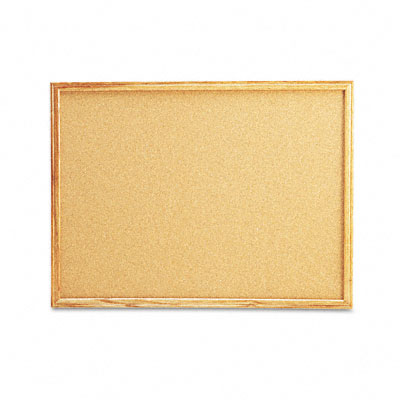
I'd been dying to check out a newer thrift shop in Northfield (new to me) and was glad I did. I scored a 2' x 1.5' bulletin board for a buck! The cork wasn't pretty, but that is totally okay, I planned to cover it in fabric anyway. I like the idea of displaying jewelry within frames, but needed something large enough to house a lot of jewelry. This fit the bill. MATERIALS:
-bulletin board
-fabric (larger than bulletin board)
-iron
-scissors
-staples, tacks or straight pins.

1.) To get started you will need a bulletin board. Any size will do. Pick out a fabric you like to use to cover it. Something stiffer or heavier is better as it won't sag or show the pin marks as much as finer fabrics. I used some sort of heavy woven rayon, it reminds be of 'burlap-lite'.

Depending on what you want to use your bulletin board for will help you decide what fabric to use. If you're using it on a wall in a room, think of a fun print that compliments your space. Pictures and notes will jump off nicely. If you are using it for jewelry display like I am, consider a solid color, or a very small scale/monotone print or texture.

I go back and forth as to whether I find jewelry pops better on a light or dark background. It all depends on the jewelry and the lighting. I opted for navy blue this time around. I thought it would make the subtle natural frame pop more and give me that framed jewelry look I was hoping for.

2.) Make sure you have a piece of fabric a little larger than the bulletin board. Once you have picked out your fabric, iron it. Then place it over the board and cut around the edges. IMPORTANT: make sure you cut 1/2"-1" extra on each side as you will be tucking this under to give a finished edge to your look.

3.) Once you have your fabric cut, center it over the cork. I found it works best to start in the center of the longest edge. Fold the edge of the fabric under. Here you get to make another style decision: staples, tacks or pins. I find staples to be quick and to give you a long lasting hold. Tacks are also good. Pins may need to be readjusted periodically to keep the fabric taught. Once you have decided which sharp implement to use, tack down the edge of the fabric in one spot.

4.) Smooth out the fabric and pull it tight to the opposite side. Fold under the fabric edge and tack it down.

5.) Repeat this step working your way from the middle out. Once you reach the corners, you will have to fold down the edges of both sides at once.

6.) As with the long sides, start in the center, fold fabric under and tack. Pull taught to opposite side, fold fabric under and tack. Repeat until all edges are securely tacked down.

7.) Fin!

Here are some pictures of my finished fabric covered bulletin board.


And here it is in action!

Wednesday, July 14, 2010

Tutorial: Sewing Kit - Basic Sewing Skills


The following picture tutorial will teach you how to make a sewing kit. This sewing kit is great for beginners as it covers several basic skills - sewing seams with right sides together, clipping corners to reduce bulk, turning and pressing pieces - like one would do for a pillow case, pressing up a hem and stitching - like you could do to hem pants, top-stitching, sewing on a button and hand stitching.

I've included pictures of each step as again, this is a great project for beginners. To view any of the pictures larger, simply click on them.

Sewing Kit

Materials:
1 - 20" x 15" piece of cotton fabric
1 - Button
1 - 8" - 10" piece of ribbon (1/2" wide or less is best)

Equipment:
Sewing Machine (you could also hand stitch the whole thing as well)
Iron
Needle
Thread
Scissors
Pins

Suggested supplies to fill your finished sewing kit:
Safety Pins
Straight Pins
Needles
Spools of Thread
Needle Threader
Small scissors (manicure scissors are great)
Seam Ripper
Measuring Tape etc.

Instructions:
1. Cut a rectangle of fabric 20" x 15".

2. With right sides together (in sewing the right side is what you would consider the outside - the bolder print, the front, the wrong side is the back/inside/less bright print), fold the fabric in half on the 20” long side. Pin each side. When you pin be sure to insert the pins perpendicular to the edge/stitch line.

3. Stitch down each side about 5/8” in from the edge. Be sure to back stitch at each end. Remove pins. Trim threads.
4. Trim the corners at a diagonal on the fold end of the seam. Be careful not to clip the stitches.

5. Turn right side out, use a blunt pointed object to push out the corners to give a sharp finish and press with the iron.
6. The fold side will be the top, the rough raw edge will be the bottom. Fold the raw edge up ½” and press with the iron. Fold up a second time ½” hiding the raw edge and iron again. Pin the ironed side.

7. Stitch along the inner edge of the folded side. Back stitch at each end. Remove pins. Trim threads.
8. Fold up the bottom edge about 3” (just under half way) with the folded edge facing inside. Pin both sides and stitch the full length of the sides. Remove pins. Trim threads.

9. With the bottom of pocket facing you, fold the fabric in thirds like a letter, bringing the stitched edges to meet the folds. Mark the crease lines with a pin at the top and the bottom of each.
10. Stitch from the bottom of the sewing kit to the top, back stitch at both ends, following the invisible crease line you marked with the pins. Do this for both crease lines. Remove pins. Trim threads.
11. Fold the sewing kit in half, lining up the two stitched sides, mark the crease line with a pin at the top and bottom as you did in the previous step. Stitch from the bottom of the sewing kit to the top, back stitch at both ends, following the invisible crease line you marked with the pins. Remove pins. Trim threads.
12. Fold the sewing kit in thirds along your stitch lines. Insert the right side flap first. On the outside of the left hand flap, attach a button about 1” from the edge, half way up the front. Be careful not to sew it into your pocket, thus stitching your pocket closed.
13. Close the sewing kit again. With your 8” – 10” strip of ribbon, make a loop around the button. Line up the ends of the ribbon and reach them around to the back, fold the raw ends under, pin in place and stitch the ribbon loop. Again, be careful not to sew into your pocket on the inside.

14. To finish, insert pins, needles, spools of thread and needle threader that are provided today. At home, you can add a small pair of scissors, a seam ripper, a tape measure and more!